

















A real-world case discussion from the front lines of addiction medicine
Key Takeaways
- Documentation integrity is non-negotiable – You cannot edit or redact a note you didn’t write. This is a legal and ethical boundary.
- Notes are amended, never redacted – Patients can submit written disputes through medical records administration. The original note always remains intact.
- This is an administrative issue, not a clinical one – Disputed records belong with medical directors or risk management, not individual physicians.
- Set crystal-clear boundaries upfront – State explicitly that you cannot alter existing records. Any new evaluation becomes part of the permanent record.
- The demand itself may be clinically significant – Intense focus on changing documentation may represent avoidance of treatment or underlying psychopathology.
The Scenario
Working as the only physician at a substance use disorder (SUD) treatment center, I recently encountered a situation that many of us face but few discuss openly. Here’s what happened:
A colleague, a physician assistant (PA), completed an initial evaluation on a patient entering our intensive outpatient program (IOP). The patient has borderline personality disorder, a history of suicidal and homicidal ideation, and was notably guarded during the assessment—likely due to an ongoing custody battle. To complete a thorough evaluation, this colleague appropriately reviewed and documented information from the patient’s medical records.
When the patient accessed her evaluation through the patient portal, she became furious. She demanded extensive redactions and insisted on meeting with the PA to change the note. The colleague declined.
This wasn’t the patient’s first rodeo: she had been discharged from a previous outpatient clinic partly because of repeated demands for note amendments and redactions.
The situation escalated to our medical director, who suggested the patient meet with me—not for medical care or medication management, but specifically to change the original evaluation and redact chart-reviewed information.
I responded that I wasn’t the appropriate person for this task. I offered to conduct my own evaluation and provide medication management if she wanted, but I couldn’t alter another provider’s documentation. Despite my position, I suspected they’d make me see her anyway.
So I turned to my colleagues: How would you handle this?
The Collective Wisdom: Expert Responses
On Documentation Integrity and Legal Concerns
The fundamental principle that emerged clearly: You cannot edit a note you didn’t write. This isn’t just good practice it’s a legal and ethical boundary.
One colleague emphasized the importance of documentation integrity with a suggested response: “I am wary of the possible repercussions of altering a legal document,” and recommended specifically noting concerns like “they have been suicidal and homicidal in the past, so I’m concerned about leaving out pertinent information in case of a negative outcome.” When in doubt, involve legal counsel.
The Proper Process for Disputed Records
Multiple respondents outlined the appropriate pathway:
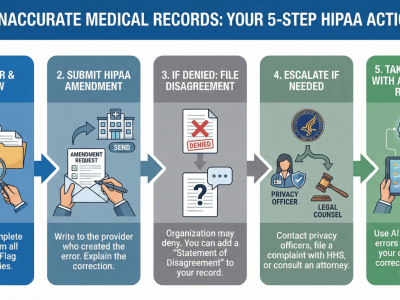
1. Patient addendums are the correct mechanism. Patients have the right to disagree with their medical records, but notes are amended, never redacted.
2. The patient should submit a written letter detailing what information they dispute and why. This letter becomes part of the medical record.
3. The original author (or their supervisor) determines whether an amendment is appropriate. If amendments are made, they’re added as addendums—the original note remains intact.
4. This should go through proper channels—typically medical records administration or risk management, not individual providers.
Where This Belongs in the Chain of Command
A recurring theme: This is not a physician’s responsibility. This is squarely a medical director’s job, or at minimum, the PA’s supervisor’s responsibility.
One comment cut to the chase: “This should be the medical director’s job. But if somehow I got dragged into this, I would be clear upfront before offering to meet with her that I cannot alter existing medical records.”
If You Must Get Involved
Several colleagues offered pragmatic approaches if you’re forced into the situation:
Be crystal clear about boundaries upfront:
- State explicitly that you cannot alter existing medical records
- Explain that if you conduct your own evaluation, that becomes part of the record too
- Clarify that meeting with you means you’re providing a second clinical opinion, not editing someone else’s work
One compelling approach: Offer an independent evaluation where “whatever you say in the eval stays.” Document your own assessment based on your interview and examination, which naturally becomes part of the permanent record.
If you’re feeling particularly direct (or as one colleague put it, “petty like me”): Copy the relevant historical portions of the PA’s note, cite them as historical information, then add extensive direct quotes from your interview with the patient. Bill appropriately for your time—don’t do unpaid work.
The Clinical Reframe
Perhaps the most insightful response addressed the underlying dynamics:
“She has a problem with substance use and she needs to focus all her energy on recovery. By focusing on notes, she is avoiding the hard work she needs to do.”
If you do see this patient, redirect immediately:
- Make it clear from the start: you’re there to focus on her recovery
- Discuss her thoughts, feelings, and actions around substances and recovery
- If she brings up the notes, redirect quickly back to treatment
This reframes the encounter from a conflict about documentation to a therapeutic opportunity—while maintaining appropriate boundaries.
Special Considerations
EMR capabilities vary. Some systems allow for different note types, including patient-facing notes and more comprehensive clinical notes not available on the portal. Know what your system can do.
Competence and trust matter. If the PA is reliable and competent (as noted in this case), consider adding an addendum like: “The patient disagrees with [specific content] and requests it be changed. The note stands as written.”
Pattern recognition is important. One colleague wisely noted: “This type of patient is never going to be satisfied and it is only going to cause you a headache.” Sometimes the answer is: “They are welcome to go elsewhere.”
The Nuclear Option
For truly intractable situations, one suggestion: recommend the patient contact a forensic physician if she’s seeking a non-treatment-directed evaluation. This removes the situation from the treatment realm entirely.
The Custody Battle Context
Several responses touched on this elephant in the room. Patients in custody battles often have legitimate concerns about documentation, but they also may have motivations beyond clinical care. The PA’s note likely contained accurate clinical information that the patient fears could harm her custody case.
This doesn’t change the fundamental answer, but it does explain the intensity of the patient’s response and why this won’t resolve easily.
The Bottom Line
When patients demand changes to medical records:
1. Maintain documentation integrity – never redact or alter completed notes
2. Follow proper administrative channels – this isn’t a clinical problem requiring a clinical solution
3. Know your role and stay in your lane – if you didn’t write it, you can’t change it
4. Offer legitimate options – independent evaluations, patient addendums, written disputes through medical records
5. Set clear boundaries – especially about what you can and cannot do
6. Consult risk management – when in doubt, get legal and compliance involved
7. Consider the clinical picture – sometimes the demand itself is clinically significant
8. Protect yourself – document your boundaries, bill appropriately, consult with legal as needed
And perhaps most importantly: Don’t let administrative pressure push you into ethically or legally questionable territory. The medical record exists to document clinical reality, not to satisfy patients’ preferences or legal strategies.
What are your experiences with similar situations? How does your institution handle disputed medical records?
___
This discussion represents the collective wisdom of practicing physicians and mental health professionals. While the specific case details have been preserved, all responses represent general guidance and should not be considered legal advice. Always consult your institution’s policies, risk management, and legal counsel when handling disputed medical records.